
Switcheroo
Recovery, relapse, and healing after a heart-lung transplant from the patient’s perspective.


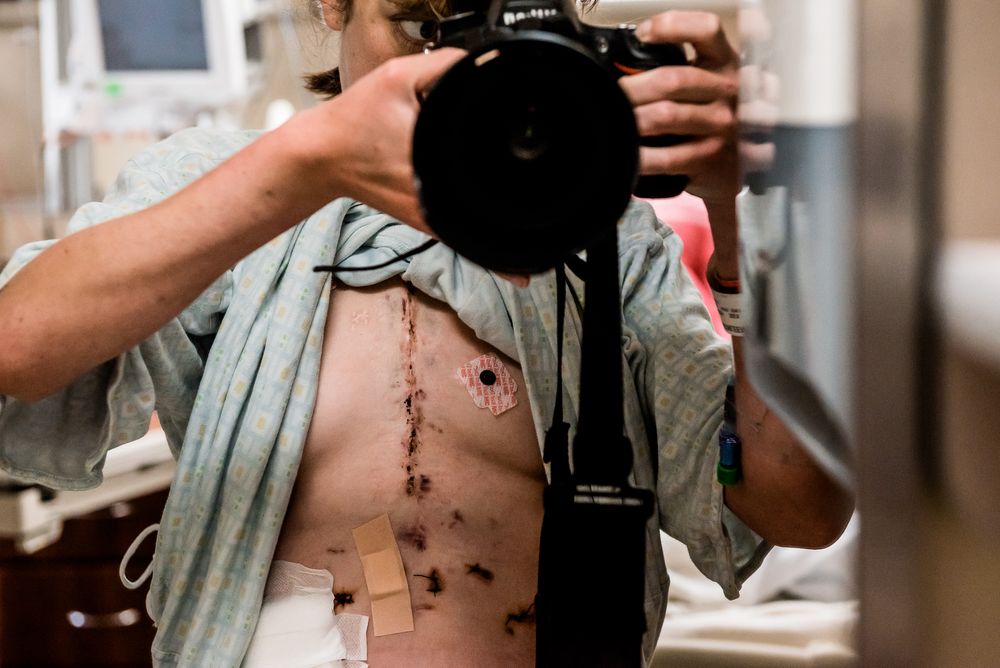


A heart-lung transplant was the worst-case scenario for our family until it became a choice between life and death.
In May 2016 I was in the ICU hemorrhaging blood from my lungs. After living with Pulmonary Hypertension for 16 years, and losing countless friends to the disease, I knew what was at stake. My family and I chose transplantation, and with miraculously perfect timing another family chose to save my life through organ donation.
The transplant remodeled my body physically and transformed every part of my day-to-day life. I’ve taken photos throughout, intentionally documenting highs and lows.
There is beauty in the complex layers of fear, sadness, joy, and optimism inherent in organ donation and transplantation.
When I look back on the photos I took, I remember and process more of what has been blurred by time, grief, and psychoactive, memory-dimming medications. The only form of control I had in some moments was to photograph them. I took the photos to acknowledge the juxtaposition in my life and find some humor in hardship.
My partner light-heartedly refers to my surgery as “the ol’ switcheroo,” fully aware of what I endured and the endless medication post-transplant life promises. Ignoring discouraging survival statistics and adopting a hopeful attitude was essential to integrating chronic immunosuppression into the full and active life I lead today.